A Developer-Centered Design Approach to AI Inference Billing
AI graphics generation, crypto billing, & analytics dashboards, oh my!
Organization
Circle
Contributions
UX Design, Design Systems
Timeline
January - April 2025
Overview
The Impulse
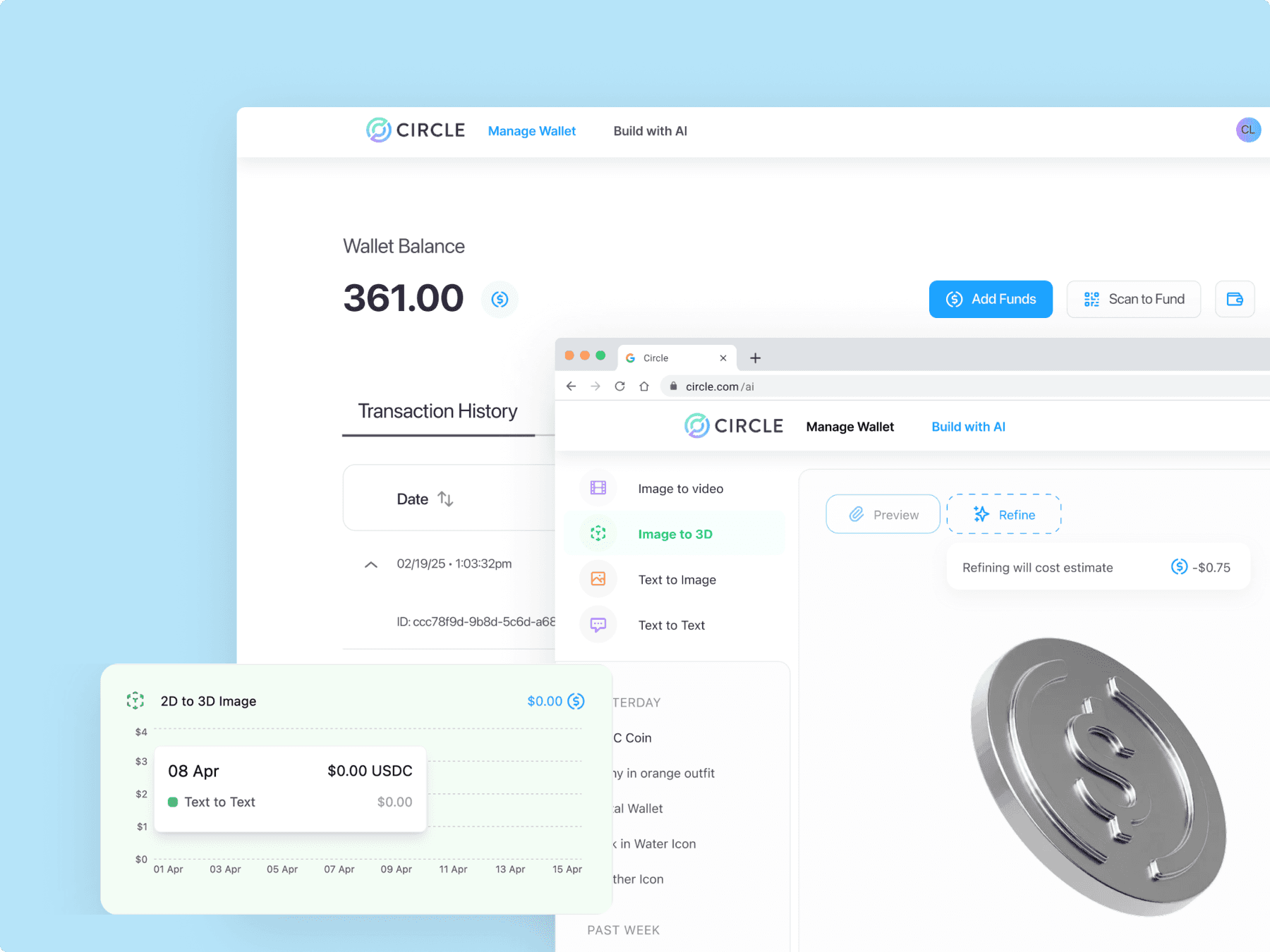
Circle provides infrastructure for their cash-backed stablecoins to businesses around the world, and they’re increasingly prioritizing their relationships with AI product developers. They partnered with our team at Codelab, a student-led software development agency at UC Davis, to explore how meter-based billing using USDC could support AI inference products. While usage-based pricing is common in AI tools, developers express hesitation around crypto payments due to concerns about trust, transparency, and system complexity.
Our Solution
We designed a proof-of-concept AI billing platform demonstrating 4 AI generation capabilities and how usage could be metered, billed, and visualized through Circle’s ecosystem. I led the design of the developer analytics dashboard, which became the primary mechanism for helping developers visualize how usage translates into specific costs and revenue. The final concept was presented internally to Circle’s VP of Product and Developer Products team of over 100+ engineers.

Research & Insights
Understanding Developer Hesitation
We surveyed AI developers with varying familiarity with crypto and conducted interviews with domain experts at Circle. Across both groups, a consistent theme emerged: developers weren’t opposed to crypto itself, but were distrustful of unclear systems and opaque billing logic.
Competitive Review
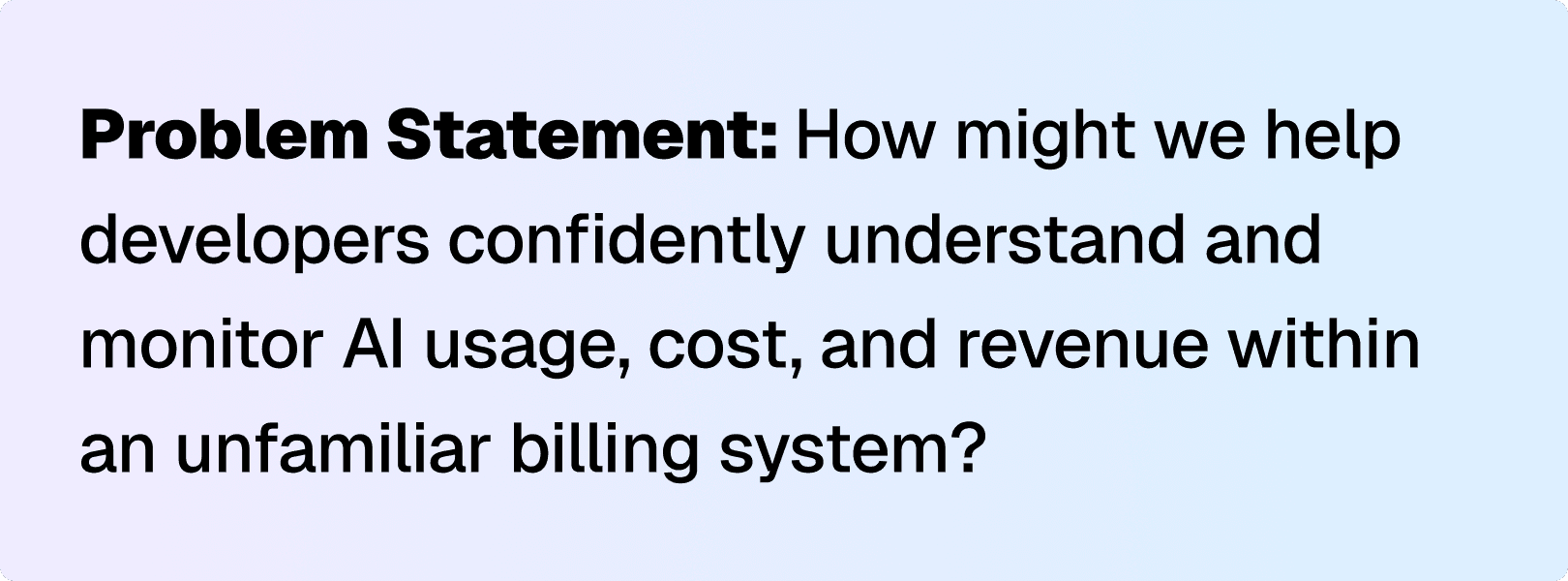
We analyzed 6 existing crypto and AI billing tools (e.g., OpenRouter, Metronome, Tether) and identified a key opportunity: clarity in metrics is trust. These existing tools suffered from:
Dense, jargon-heavy dashboards
Fragmented billing and usage views
Poor visualization of cost vs. value
The MVP
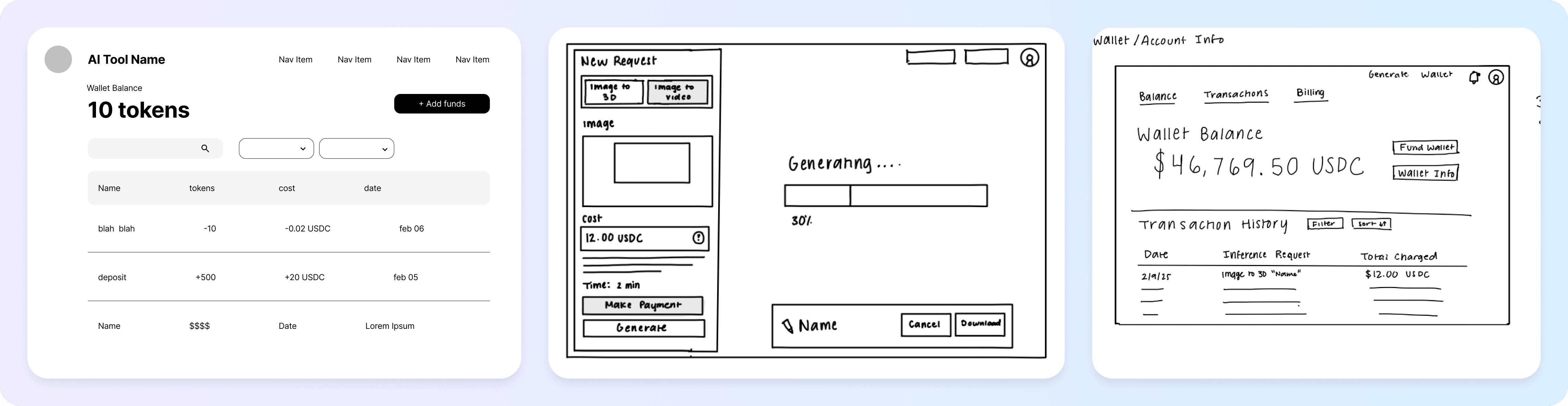
Communicating with our stakeholders was key to scoping our MVP and defining success. We started sketching after we first narrowed down our product to the following primary functions:
AI Inference – generating content and tracking usage
Transaction & Wallet Management – monitoring balances and payments
Metrics & Dashboard Exploration
As the project evolved, I I raised a concern: without the ability to visualize their changing balances, developers may struggle to trust or adopt the system. So, I advocated to go beyond the original MVP and include a Developer Analytics view. I led the design of this critical addition, shifting the product from just a billing demo to a learning tool for meter-based crypto billing.
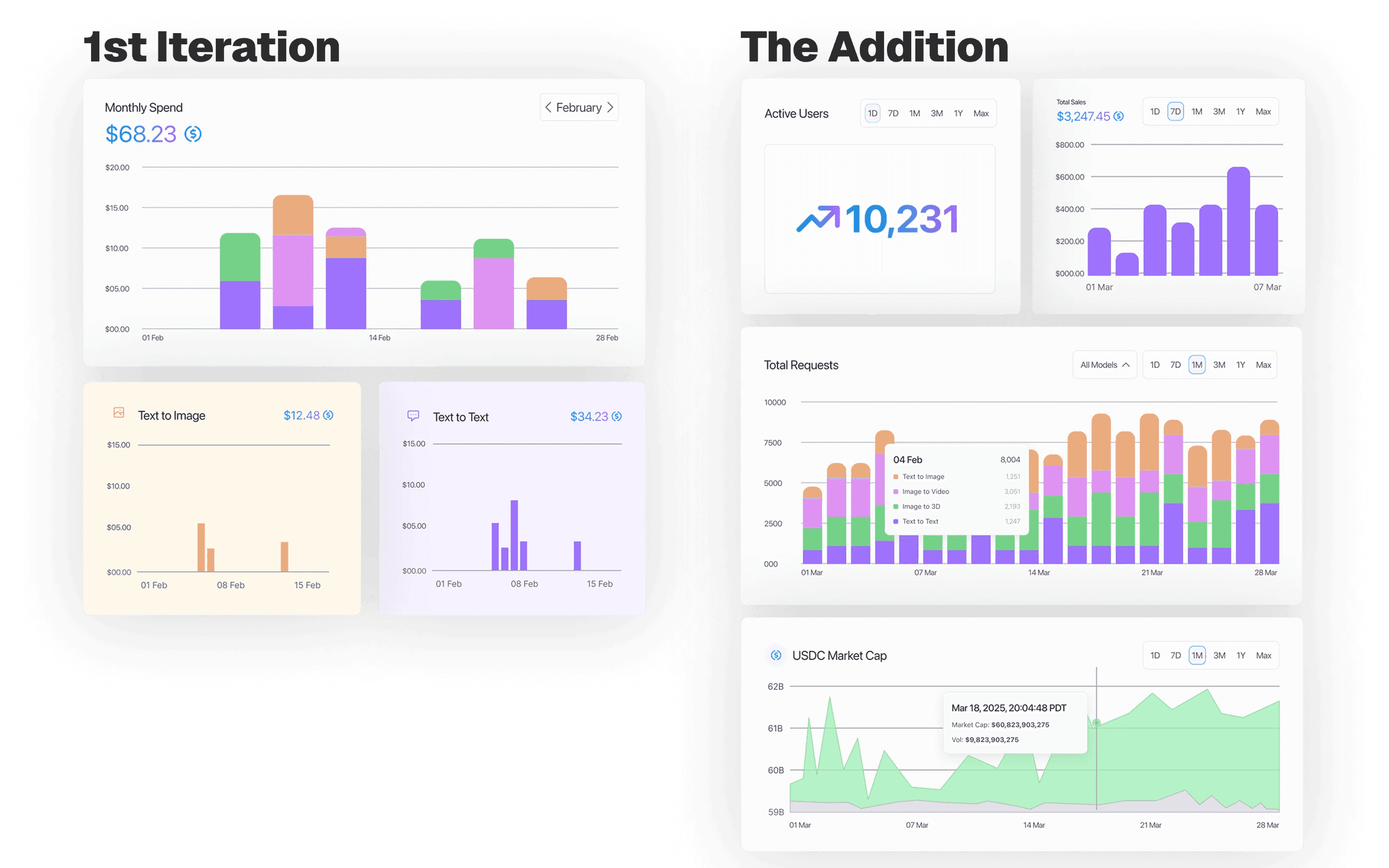
While presenting my first iteration with domain experts at Circle, we discussed that revenue alone lacks operational context, and agreed that developers need to be able to correlate usage, users, and time to build intuition. With this feedback, I designed an additional page with more time-based narratives connecting user activity, usage, and financial outcomes.
Team-wide Design Decisions
As our design team iterated on our own features of focus, we critiiqued and usability-tested each other’s work to help us align on a few product-wide principles:
Familiar patterns first: grounded the experience in recognizable AI and fintech interfaces to build trust quickly
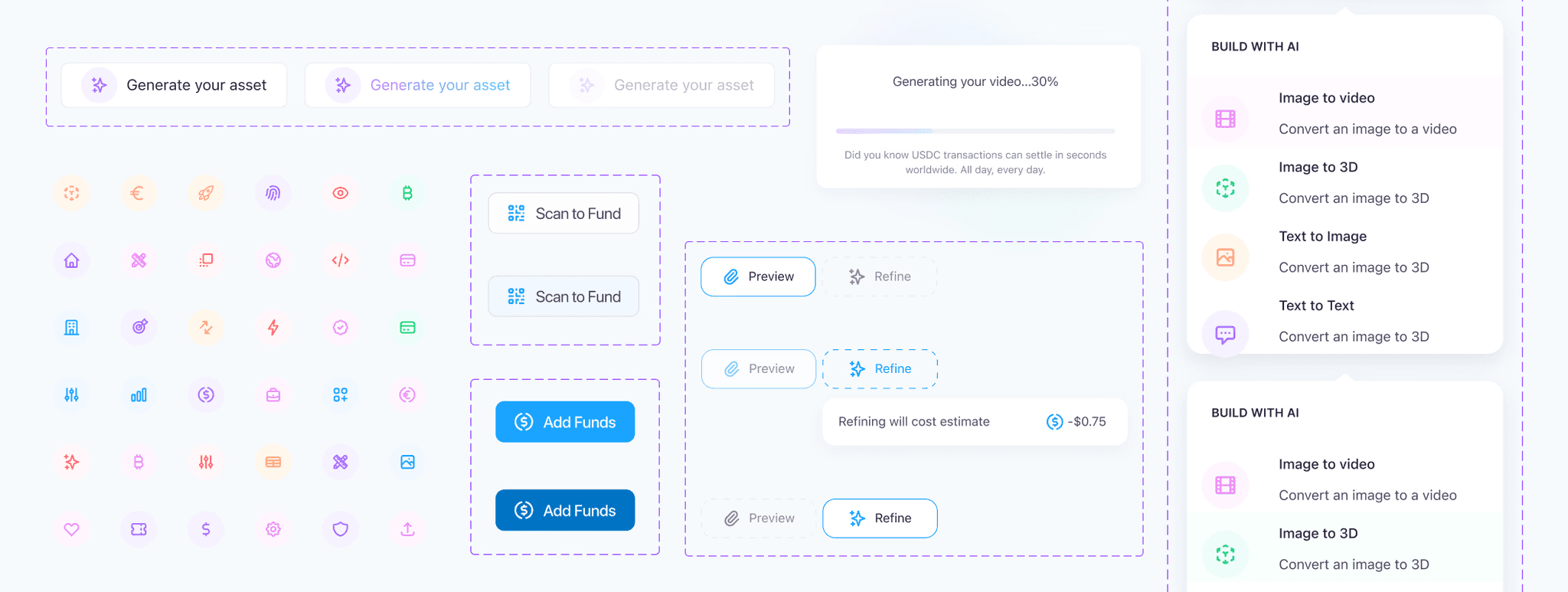
Centralized clarity: unified transactions, usage, billing, and wallet management into a single, tabbed hub
Guided by simplicity: reduced filters, minimized jargon, and surfaced cost and usage cues only where they added clarity
System consistency: followed Circle’s brand guidelines and established shared components for a unified experience and smooth handoff
Final Solution
The final proof-of-concept presents a cohesive AI billing experience centered on transparency and familiarity.
AI Inference Experience
Four AI generation modes (text, image, video, 3D)
Clear, real-time wallet deductions after each request
Generation history tied directly to usage and cost
Transaction & Wallet Management
Centralized view of transactions, billing history, and balances
Simple deposit and withdrawal flows
Minimal crypto jargon, supported by tooltips and conversions
Developer Analytics
Revenue and usage graphs designed for quick pattern recognition
Clear mapping between API usage and financial outcomes
Visualizations that reinforce trust by making billing logic legible
Together, these views demonstrate how USDC-based billing could function in practice, without requiring developers to deeply understand crypto infrastructure.
Reflections
Challenges
Designing trust in a system users were predisposed to doubt
Avoiding over-complexity in analytics while maintaining accuracy
Balancing speculative exploration with realistic developer workflows
Next Steps
Validate dashboard comprehension with live developer testing
Expand analytics to include forecasting and alerts
Explore how non-crypto-native developers interpret financial metrics over time

Takeaways
This project reinforced that designers can—and should—advocate for scope changes when insights reveal gaps. By reframing analytics as a literacy and trust mechanism, not a reporting tool, I learned how visual systems can reduce fear and build confidence in unfamiliar financial infrastructure. Thanks Circle and Codelab for a great project that taught me these lessons!
Thanks for visiting!
I'd love to chat about projects,
opportunities, and all things design.
Contact me :)